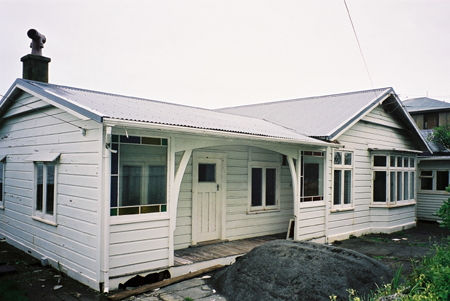
Katherine Mansfield’s memories of her birthplace and first home on Tinakori Road inspired the internationally recognised writer to recreate her experiences in some of her most famous short stories. The restored house now provides valuable insight to a large part of her writing.
Mansfield was born Kathleen Mansfield Beauchamp in 1888. The previous year her father, Harold Beauchamp, leased land for a forty-year period from the former Speaker of the House of Representatives, Sir Charles Clifford. A requirement of the lease was the erection of a ‘good and substantial house of the value of £400.’
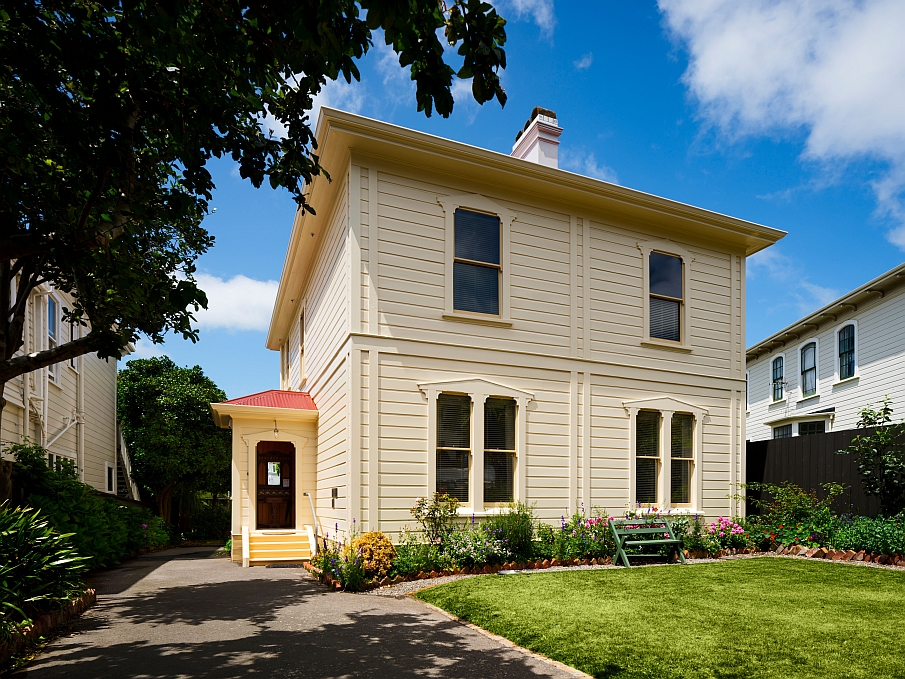
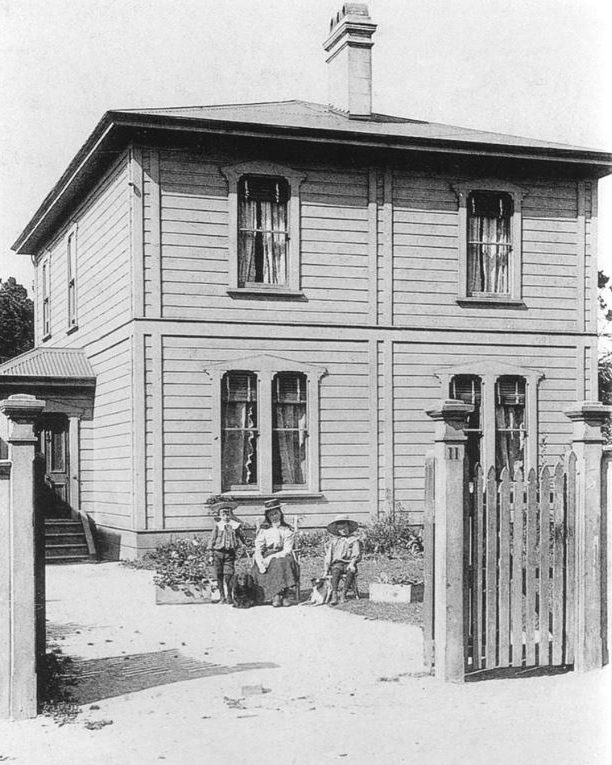
Harold Beauchamp, who became an eminent Wellington businessman, moved into his two-storey timber house with two children, his wife Annie and her two sisters and mother in 1888. Built in the middle of an economic depression, the façade of the 209 square metre house was relatively plain. Paired facings and simple Classical style pediments over each of the four, symmetrically placed sash windows are the only adornment. The interior of the five-bedroom house was also modestly decorated in a style influenced by the Chinese designs popular in New Zealand at that time. It was described by Mansfield as ‘that awful cubby-hole in town’ and Harold Beauchamp moved his family to a more prestigious house in Karori in 1893.
In Europe, 24 years later, Katherine Mansfield captured the memory of that move in one of her most famous stories, Prelude, a shorter version of her longest work, The Aloe. As Kezia, Mansfield recalls the details of the emptied house. The house was also used as a setting in Mansfield’s short story A Birthday. Since her death in France in 1923 Mansfield’s literary reputation has grown immensely. Her stories have been translated into more than 24 languages and reprinted in numerous editions. She is also significant for the queer perspective she brings to her writing. Her literature, personal journals and letters infer the passionate and sometimes sexual experiences she had with women which began while she was in New Zealand, though the true nature and depth of these relationships may never be known.
Recognising the importance of Mansfield’s New Zealand memories and childhood experiences in her writing an independent society, formed in 1986, attempted to purchase Mansfield’s birthplace, the last Beauchamp home in near original condition. The society’s aim was to restore the house to its appearance in the early years of Mansfield’s life to mark the centennial of her birth in 1988. Generous public donations allowed for the purchase of the house in 1987 and also financed the extensive research and renovations required. It was recognised that the decision to restore the house to its original condition meant the removal of much of the history of the building, including any evidence of its other notable resident, Dr Frederick Truby King [1858-1938], co-founder of the Plunket Society, who had lived there between 1921 and 1924. Yet restoration was considered crucial if the early atmosphere of Mansfield’s life was to be experienced and understood by visitors.
Restoration involved careful research into the house and grounds. As the original plans were missing, the society worked backwards from plans detailing 1907 alterations and relied on Mansfield’s descriptions as well as photographs and archaeological and architectural analyses of the house and garden to accurately recreate the surroundings. The Victorian town garden has been re-established to its original contours and planted with more than 200 species commonly used in early Wellington gardens. Mansfield’s favourite plants, arum lilies and ‘good, old fashioned marigolds’ have continued to regenerate since the Beauchamps were in residence. As only a sixth of the garden was excavated, the untouched ground remains a valuable archaeological resource for future generations.
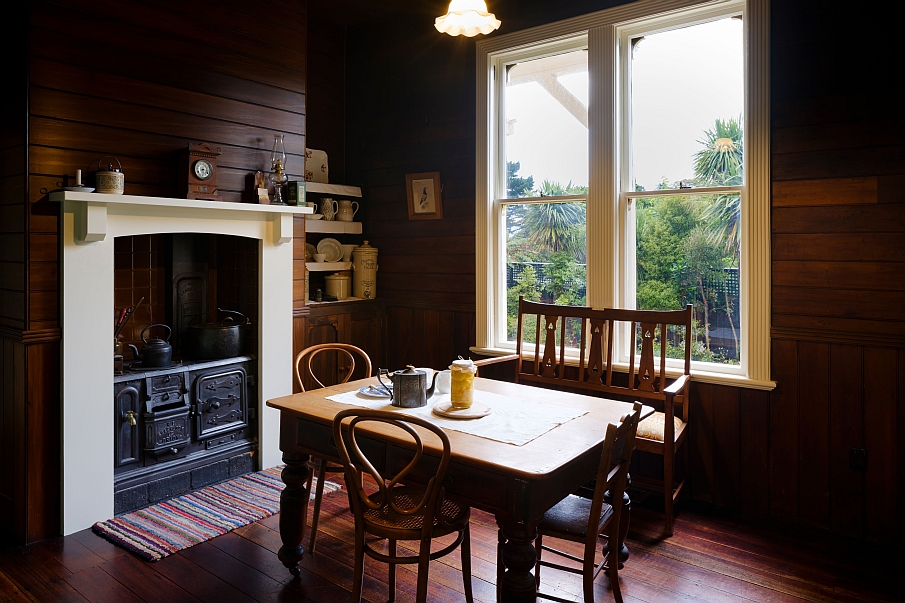
The house itself was restored to its original state. The staircase newel posts and balusters were reinstated. Large windows installed in the kitchen and front rooms in 1907 were replaced to recreate the dark rooms recalled by Mansfield in A Birthday and Prelude. Copies of the original wallpaper decorate all rooms but the master bedroom. These were carefully re-hung in the traditional manner and are a valuable source of information on interior decoration in Wellington during the 1880s.
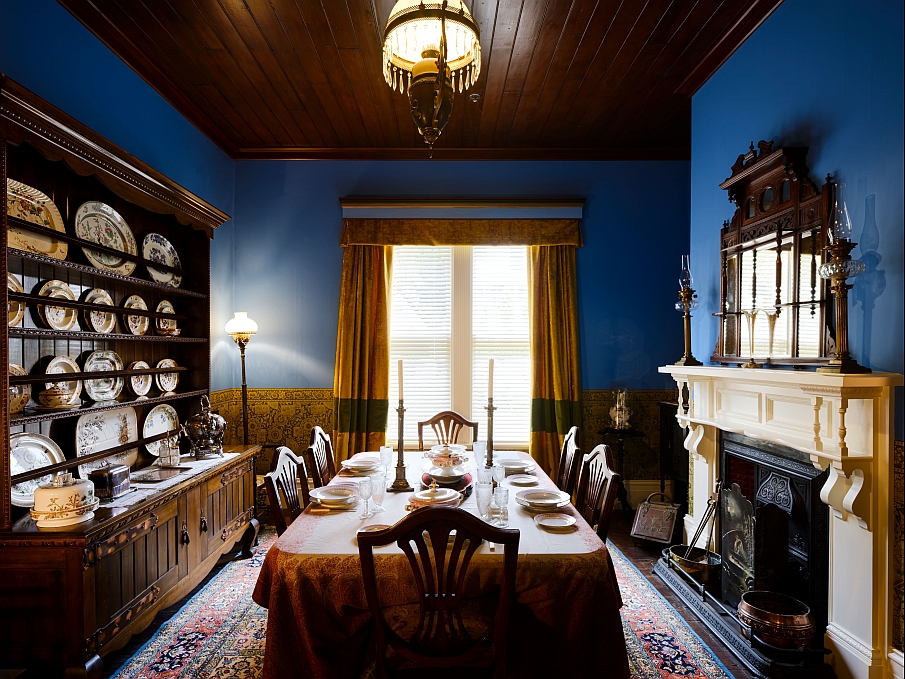
Some rooms have been devoted to exhibits of Mansfield’s early years and accomplishments. As well as a typewriter that is the same model Mansfield used and a collection of first edition books, the house contains a replica of the doll’s house described in The Doll’s House, correct in every detail from the oily green paint to the amber lamp. Other rooms have been furnished to reflect the social status of the Beauchamps during their period of occupation. The drawing room includes Venetian blinds similar to those through which Kezia observed ‘long pencil rays of sunlight’ in Prelude, and a piano like the one described in The Birthday.
The Katherine Mansfield Birthplace has international cultural significance as the birthplace and inspiration of Katherine Mansfield, a writer whose talent has been recognised in New Zealand and throughout the world. The restored house, the first New Zealand museum to honour a woman, gives valuable insight into Mansfield’s writing and highlights the importance of childhood memories in her stories. A winner of national and international tourism awards, the house is a well-patronised educational resource and has a vibrant public literary programme. The unexcavated area in the garden is an irreplaceable source of future information on Mansfield while the birthplace, the only Beauchamp home in near-original condition, is also a unique treasure. The recreated wallpapers and the traditional skills used during the restoration add greatly to the physical importance of the house and careful attention to detail allows the visitor to gain real insight into Mansfield’s life. It is also noteworthy as the early home of Sir Harold Beauchamp, who was of national importance in New Zealand’s business circles.
Mansfield was born Kathleen Mansfield Beauchamp in 1888. The previous year her father, Harold Beauchamp, leased land for a forty-year period from the former Speaker of the House of Representatives, Sir Charles Clifford. A requirement of the lease was the erection of a ‘good and substantial house of the value of £400.’
Harold Beauchamp, who became an eminent Wellington businessman, moved into his two-storey timber house with two children, his wife Annie and her two sisters and mother in 1888. Built in the middle of an economic depression, the façade of the 209 square metre house was relatively plain. Paired facings and simple Classical style pediments over each of the four, symmetrically placed sash windows are the only adornment. The interior of the five-bedroom house was also modestly decorated in a style influenced by the Chinese designs popular in New Zealand at that time. It was described by Mansfield as ‘that awful cubby-hole in town’ and Harold Beauchamp moved his family to a more prestigious house in Karori in 1893.
In Europe, 24 years later, Katherine Mansfield captured the memory of that move in one of her most famous stories, Prelude, a shorter version of her longest work, The Aloe. As Kezia, Mansfield recalls the details of the emptied house. The house was also used as a setting in Mansfield’s short story A Birthday. Since her death in France in 1923 Mansfield’s literary reputation has grown immensely. Her stories have been translated into more than 24 languages and reprinted in numerous editions. She is also significant for the queer perspective she brings to her writing. Her literature, personal journals and letters infer the passionate and sometimes sexual experiences she had with women which began while she was in New Zealand, though the true nature and depth of these relationships may never be known.
Recognising the importance of Mansfield’s New Zealand memories and childhood experiences in her writing an independent society, formed in 1986, attempted to purchase Mansfield’s birthplace, the last Beauchamp home in near original condition. The society’s aim was to restore the house to its appearance in the early years of Mansfield’s life to mark the centennial of her birth in 1988. Generous public donations allowed for the purchase of the house in 1987 and also financed the extensive research and renovations required. It was recognised that the decision to restore the house to its original condition meant the removal of much of the history of the building, including any evidence of its other notable resident, Dr Frederick Truby King [1858-1938], co-founder of the Plunket Society, who had lived there between 1921 and 1924. Yet restoration was considered crucial if the early atmosphere of Mansfield’s life was to be experienced and understood by visitors.
Restoration involved careful research into the house and grounds. As the original plans were missing, the society worked backwards from plans detailing 1907 alterations and relied on Mansfield’s descriptions as well as photographs and archaeological and architectural analyses of the house and garden to accurately recreate the surroundings. The Victorian town garden has been re-established to its original contours and planted with more than 200 species commonly used in early Wellington gardens. Mansfield’s favourite plants, arum lilies and ‘good, old fashioned marigolds’ have continued to regenerate since the Beauchamps were in residence. As only a sixth of the garden was excavated, the untouched ground remains a valuable archaeological resource for future generations.
The house itself was restored to its original state. The staircase newel posts and balusters were reinstated. Large windows installed in the kitchen and front rooms in 1907 were replaced to recreate the dark rooms recalled by Mansfield in A Birthday and Prelude. Copies of the original wallpaper decorate all rooms but the master bedroom. These were carefully re-hung in the traditional manner and are a valuable source of information on interior decoration in Wellington during the 1880s.
Some rooms have been devoted to exhibits of Mansfield’s early years and accomplishments. As well as a typewriter that is the same model Mansfield used and a collection of first edition books, the house contains a replica of the doll’s house described in The Doll’s House, correct in every detail from the oily green paint to the amber lamp. Other rooms have been furnished to reflect the social status of the Beauchamps during their period of occupation. The drawing room includes Venetian blinds similar to those through which Kezia observed ‘long pencil rays of sunlight’ in Prelude, and a piano like the one described in The Birthday.
The Katherine Mansfield Birthplace has international cultural significance as the birthplace and inspiration of Katherine Mansfield, a writer whose talent has been recognised in New Zealand and throughout the world. The restored house, the first New Zealand museum to honour a woman, gives valuable insight into Mansfield’s writing and highlights the importance of childhood memories in her stories. A winner of national and international tourism awards, the house is a well-patronised educational resource and has a vibrant public literary programme. The unexcavated area in the garden is an irreplaceable source of future information on Mansfield while the birthplace, the only Beauchamp home in near-original condition, is also a unique treasure. The recreated wallpapers and the traditional skills used during the restoration add greatly to the physical importance of the house and careful attention to detail allows the visitor to gain real insight into Mansfield’s life. It is also noteworthy as the early home of Sir Harold Beauchamp, who was of national importance in New Zealand’s business circles.